In short
To make a hide and seek game in Roblox Studio, build a lobby and a map with many hiding spots, then a server round loop: pick a seeker (not the same player every time), send everyone to the map, freeze the seeker during a hiding phase, then release them for a seeking phase. A tag counts when the seeker clicks or touches a hider and the server confirms they are within a few studs. The round ends when everyone is found or time runs out.
- Pick the seeker fairly: whoever has waited longest, not a pure random pick that can choose the same player three times.
- The server checks every tag by distance. The client only says who it tried to tag.
- Map design is the game: many spots, some obvious and some clever, and no spot nobody can reach.
On this page
What makes a hide and seek game work
The loop in one line: hide (or count), wait in a spot with your heart racing, get found or survive, swap roles, play again.
| How often | What happens | What it needs from you |
|---|---|---|
| Every few seconds | Creep, peek, run when spotted | A map with sight lines, corners and places to squeeze into |
| Every round (2 to 4 minutes) | Hide or seek, then a result | A clear hiding countdown and a seeking timer |
| Every few rounds | A turn as the seeker | A seeker pick that gives everyone a turn |
| Every session | Wins, coins, a new map | Rewards for both roles and several maps |
- Both roles are fun. Hiders need tension, seekers need a fair chance. If seekers rarely find anyone, nobody wants to seek.
- A real head start. The seeker must not see where people go. Block their view and freeze them during the hiding phase.
- Good spots, not perfect ones. A spot inside a wall or under the map ruins the round. Every spot should be findable by a careful seeker.
- Found players stay in. Turning found hiders into extra seekers keeps them playing instead of waiting.
- Short rounds. Three minutes of seeking is plenty for a small map.
Hide and seek shares its round structure with killer vs survivors games; this guide keeps it to tagging and hiding, with no combat.
The systems you need
| System | What it does | Roblox pieces | Guide |
|---|---|---|---|
| Round loop | Lobby, hide, seek, results | A server Script, attributes for the HUD | Round system |
| Teams | Seekers and hiders, with their colours | Teams, Player.Team | Team system |
| Seeker pick | Gives everyone a turn | A server table of rounds since each player sought | This page |
| Freeze and blind | Holds the seeker during the hiding phase | Humanoid.WalkSpeed, a black screen GUI | This page |
| Tagging | Seeker tags a hider, checked on the server | RemoteEvent, a distance check | This page |
| HUD | Phase, timer, hiders left | ScreenGui, attributes read by a LocalScript | Health bar GUI |
| Rewards | Coins for surviving and for tagging | leaderstats, DataStoreService | Leaderboard |
| Maps | Several maps to rotate | Models in ServerStorage, cloned per round | Natural disaster game |
Build plan: from a baseplate to launch
First playable
- Build a lobby with a
SpawnLocation, and one small map: a house with a few rooms, furniture and a yard. Put a part namedMapSpawnin it and keep the map in the Workspace for now. - Create two teams in the
Teamsservice namedSeekersandHiders, withAutoAssignableoff. - Add the round script below, and a
TagRemoteEvent inReplicatedStorage. - Add the seeker's tag input: a LocalScript that, when the seeker clicks a character, fires
Tagwith that player. The server decides whether it counts. - Test with three players in Studio's multi-client test: one seeker, two hiders, one full round.
First public test
One map, rounds of one minute hiding and three minutes seeking, coins for both roles. Watch where hiders go: a spot every winner uses is too good, and a room nobody enters is wasted. Also count how often seekers find nobody; if it is more than one round in three, the map is too big or the time too short.
What to add for launch
- Three or more maps of different sizes, rotated or voted on.
- Found hiders become seekers, so the end of a round speeds up.
- A seeker tool with a short cooldown and a hit sound, so tagging feels physical.
- Taunts for hiders: a sound they can play once a round for bonus coins, which helps seekers too.
- Saved coins and a shop for cosmetics.
- The Maturity and Compliance Questionnaire in the Creator Dashboard: Roblox restricts who can play a game without content maturity information.
The defining mechanic: rounds and fair tags
This server script runs the whole round. It picks the seeker who has waited longest, puts everyone on the map, freezes the seeker for the hiding phase, then accepts tags only while seeking, only from seekers, and only when the two characters are within TAG_RANGE studs on the server. Found hiders join the seekers.
ReplicatedStorage
  Tag RemoteEvent
Teams
  Seekers Team
  Hiders Team
Workspace
  Map Model
    MapSpawn Part
ServerScriptService
HideAndSeek Script new-- Script in ServerScriptService named HideAndSeek.
-- Picks a seeker fairly, runs hide and seek phases, and checks every tag on the server.
local Players = game:GetService("Players")
local ReplicatedStorage = game:GetService("ReplicatedStorage")
local Teams = game:GetService("Teams")
local HIDE_TIME = 30
local SEEK_TIME = 180
local TAG_RANGE = 8 -- studs between the two characters
local tagEvent = ReplicatedStorage:WaitForChild("Tag") :: RemoteEvent
local seekers = Teams:WaitForChild("Seekers") :: Team
local hiders = Teams:WaitForChild("Hiders") :: Team
local mapSpawn = workspace:WaitForChild("Map"):WaitForChild("MapSpawn") :: BasePart
local roundsSinceSeeking: { [Player]: number } = {}
local seeking = false
local function setStatus(text: string, timeLeft: number)
ReplicatedStorage:SetAttribute("Status", text)
ReplicatedStorage:SetAttribute("TimeLeft", timeLeft)
end
local function humanoidOf(player: Player): Humanoid?
local character = player.Character
return if character then character:FindFirstChildOfClass("Humanoid") else nil
end
local function pickSeeker(players: { Player }): Player
local best = players[1]
for _, player in players do
if (roundsSinceSeeking[player] or 0) > (roundsSinceSeeking[best] or 0) then
best = player
end
end
return best
end
local function hidersLeft(): number
return #hiders:GetPlayers()
end
tagEvent.OnServerEvent:Connect(function(seeker, target)
if not seeking or seeker.Team ~= seekers then
return
end
if typeof(target) ~= "Instance" or not target:IsA("Player") or target.Team ~= hiders then
return
end
local a = seeker.Character and seeker.Character:GetPivot().Position
local b = target.Character and target.Character:GetPivot().Position
if not a or not b or (a - b).Magnitude > TAG_RANGE then
return -- too far away on the server: ignore
end
target.Team = seekers -- found: now helps seek
local tags = seeker:GetAttribute("Tags")
seeker:SetAttribute("Tags", (if typeof(tags) == "number" then tags else 0) + 1)
end)
while true do
local players = Players:GetPlayers()
if #players < 2 then
setStatus("Waiting for players", 0)
task.wait(2)
continue
end
local seeker = pickSeeker(players)
for _, player in players do
roundsSinceSeeking[player] = (roundsSinceSeeking[player] or 0) + 1
player.Neutral = false
player.Team = if player == seeker then seekers else hiders
local character = player.Character
if character then
character:PivotTo(mapSpawn.CFrame + Vector3.new(math.random(-6, 6), 4, math.random(-6, 6)))
end
end
roundsSinceSeeking[seeker] = 0
-- hiding phase: the seeker cannot move
local seekerHumanoid = humanoidOf(seeker)
if seekerHumanoid then
seekerHumanoid.WalkSpeed = 0
end
seeker:SetAttribute("Blind", true) -- a LocalScript shows a black screen while this is true
for t = HIDE_TIME, 1, -1 do
setStatus("Hide!", t)
task.wait(1)
end
seeker:SetAttribute("Blind", false)
if seekerHumanoid then
seekerHumanoid.WalkSpeed = 16
end
-- seeking phase
seeking = true
local t = SEEK_TIME
while t > 0 and hidersLeft() > 0 do
setStatus("Seek!", t)
task.wait(1)
t -= 1
end
seeking = false
local winners = hiders:GetPlayers()
setStatus(if #winners > 0 then `Hiders win ({#winners} left)` else "Seekers win", 0)
for _, player in winners do
local wins = player:GetAttribute("Wins")
player:SetAttribute("Wins", (if typeof(wins) == "number" then wins else 0) + 1)
end
task.wait(5)
for _, player in Players:GetPlayers() do
player.Neutral = true -- off both teams until the next round
task.spawn(player.LoadCharacterAsync, player) -- back to the lobby
end
task.wait(10)
endThe distance check is what keeps tags honest. A player's own computer moves their character, so a cheating seeker could report a tag from across the map. The server compares the two characters' positions as it sees them and ignores anything further than TAG_RANGE. Set it a little above the reach of your tag tool so real tags never fail.
Put the blind screen in a LocalScript in StarterPlayerScripts: watch the local player's Blind attribute with GetAttributeChangedSignal and show a full-screen black frame while it is true. If the seeker leaves mid-round, the loop keeps going with any found hiders as seekers; add a check that ends the round when the Seekers team is empty.
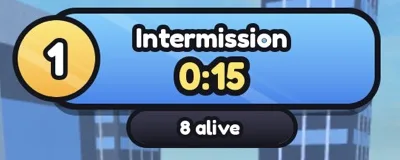
The hard part: a map with good spots
In hide and seek the map does most of the game design. A great round needs spots of every kind, and none that break the game:
- Every size of spot. Behind a sofa (quick, easy to find), inside a wardrobe (better), on top of a shelf you need to jump to (clever). Mix them in every room.
- No glitch spots. Players will try to get inside walls, under floors and outside the map. Make walls thick, put an invisible ceiling over the map, and add a kill zone under it that sends players back.
- Loops and exits. A hider who is spotted should have somewhere to run. Rooms with two doors make chases fun instead of instant.
- Size for the player count. A map that takes about a minute to walk around fits 8 to 12 players. Bigger servers need bigger maps or more seekers.
- Light and sound. Dim corners hide players; footsteps give them away. Both are tools for balance.
Monetization that fits hide and seek
Selling ways to be impossible to find, or to see through walls, breaks the game for everyone else. Sell style and convenience:
| Roblox feature | Fits well | Turns into pay-to-win when |
|---|---|---|
| Game pass (bought once) | Seeker tool skins, taunt sounds, trails in the lobby, 2x coins | It sells invisibility, a smaller character or a radar |
| Developer product (bought again and again) | Be the seeker next round, a coin pack | It skips the seeker queue every round for one player |
| Private server (free or a monthly Robux fee) | Rounds with friends only | Rarely: it only changes who is in the server |
A developer product must be granted through MarketplaceService.ProcessReceipt so a purchase is never lost; the game pass guide covers pass checks and prompts. You cannot turn on private servers and paid access at the same time. Roblox also pays creators through Creator Rewards, which replaced engagement-based payouts on 24 July 2025. Rewarded video ads, where your game qualifies, must reward a developer product and cannot be random: double coins for the next round fits.
What brings players back
- New maps. A new map is the biggest update a hide and seek game can ship, and it needs no new code if maps share the same parts.
- Stats for both roles. Rounds survived and players tagged, on a leaderboard.
- Cosmetics bought with coins. Coins earned from both roles, spent on looks that do not change hiding.
- Daily rewards. A login streak that pays coins (daily rewards).
- Friends. Party up in the lobby and offer private servers for groups.
Build a hide and seek game with RoCode
RoCode is an independent AI agent for Roblox Studio. You describe what you want in a web chat, and its free Studio plugin writes the Luau and creates the scripts, parts and UI in the place you have open. For a hide and seek game it works in rounds: first the map and the round loop, then tagging, then rewards and more maps.
Make the first playable version of a hide and seek game: a lobby, a small house map with furniture to hide behind, Seekers and Hiders teams, a server round loop that picks the player who has waited longest as seeker, a 30 second hiding phase with the seeker frozen and a black screen, a 3 minute seeking phase where tags only count within 8 studs on the server and found hiders join the seekers, and a HUD with the phase and the time left.
- Writes the round, team and tag scripts on the server, and builds the lobby and a greybox map from parts
- Can add ready-made screens such as a round timer, a leaderboard, a shop and daily rewards
- Builds the game a working part at a time, so you can play each round before the next feature
- Takes screenshots in edit mode to check the map layout
It cannot make custom meshes or animations, publish the game, or tell you whether your spots are fun: you still play rounds with friends. Free credits every day, no card needed. How RoCode builds a game.
Questions
How do I make a tag system in Roblox?
Let the seeker's LocalScript send the player it tried to tag through a RemoteEvent. On the server, check the round is in its seeking phase, the sender is a seeker, the target is a hider and the two characters are within a few studs. Only then change the target's team.
How do I stop the seeker from moving during the hiding phase?
On the server, set the seeker's Humanoid.WalkSpeed to 0 (and jumping off) for the hiding phase, and show a black screen on their client. Set the speed back when the seeking phase starts.
How do I pick a fair seeker?
Count how many rounds each player has gone without seeking and pick the highest, as the script on this page does. A plain random pick can choose the same player several times in a row.
How many players does hide and seek need?
At least three for a real round: one seeker and two hiders. It plays best with 6 to 12 on a map sized for that number.
Can I make hide and seek without scripting?
You can build the map without scripting, but the round loop, teams and tags need scripts. Paste the one on this page, or describe the game to an AI tool like RoCode and test what it builds.
Sources and further reading
- Roblox Creator Docs: Teams
- Roblox Creator Docs: Humanoid.WalkSpeed
- Roblox Creator Docs: Player:LoadCharacterAsync
- Roblox Creator Docs: security tactics. check what clients send
- Roblox Creator Docs: Developer products
- Roblox Creator Docs: Creator Rewards
- RoCode guide: Round system
- RoCode guide: Team system
How the code was checked: every script on this page passes Luau's strict type checker against Roblox's API definitions (luau-lsp, 4 November 2026). A type check catches misspelt APIs and wrong types, not game logic, so playtest in Studio before you publish.